
AI Voice Cloning Fraud: What Business Owners Need to Know Before the Next Call Comes In

The call sounds exactly right. The voice is familiar. The request is urgent. And your employee, trying to do the right thing, follows through.
That is not carelessness. That is a business that was never built to question what it hears.
AI voice cloning fraud has moved from a financial sector headline into the operational reality of businesses of every size. According to the Association of Certified Fraud Examiners' Fraud Talk podcast, fraud prevention expert Simon Marchand, CFE, noted that voice cloning tools can produce a functional replica from as little as three to five seconds of audio, and with 30 seconds, the result sounds convincingly like the person being copied. No coding knowledge required. No expensive equipment. Just an open platform and a short recording pulled from a video, a voicemail, or a conference call.
The attack is not new. CEO fraud has existed for decades. What changed is the cost to execute it and the scale at which it can now run.
Table of Contents
What AI Voice Cloning Fraud Actually Is
AI voice cloning uses machine learning to replicate the specific pitch, tone, pace, and accent of a real person's voice. Once a model is trained on a small audio sample, it can generate that voice saying anything a fraudster types into a script. The output is not a rough imitation. It is a functional replica that a person under pressure, in a normal business context, will not question.
This technology has two distinct uses in fraud. The first is targeted: a fraudster clones a specific executive's voice to authorize a transaction or override a control. The second is scaled: automated systems use synthetic voices to conduct thousands of simultaneous calls against businesses that lack detection, working through stolen credentials and recorded security question answers until something opens.
Both approaches exploit the same structural weakness. They bypass the authorization chain entirely by impersonating the person at the top of it. No password is required. No system is hacked. The human in the process becomes the access point.
The revenue that the front office generates flows directly through the back office for processing, approval, and disbursement. When the back office has no identity layer on that flow, it is exposed on every transaction.
Why This Is Now a Small Business Problem
For most of the past decade, voice cloning required significant technical resources and was primarily used against large financial institutions with high-value targets. That barrier no longer exists.
The same platforms that power legitimate content creation, podcast production, and accessibility tools are now freely available and require no technical expertise to operate. Industry research cited across multiple fraud prevention publications confirms that a convincing voice clone can be produced in minutes from a short audio sample. The FTC has documented that business imposter scams resulted in $752 million in consumer losses in 2023 alone, covering phone calls, emails, and impersonation across every channel. Voice cloning does not create a new fraud category. It makes every existing one harder to detect.
The shift in accessibility is the shift in risk. A fraudster who previously needed enterprise-level tools to target a bank now has the same capability on a free trial account. And the businesses without detection technology, without verification protocols, without documented escalation procedures, are the ones that absorb that redirected fraud.
AI did not invent CEO fraud. It removed the scale barrier. A single fraudster can now conduct simultaneous attacks across dozens of organizations. The ones without controls become the ones with losses.
Where the Attack Enters the Business
The most common entry points are also the most routine operational moments: a call requesting a wire transfer, a vendor payment change, an instruction to onboard a new payee, a directive to bypass the normal approval chain because of urgency.

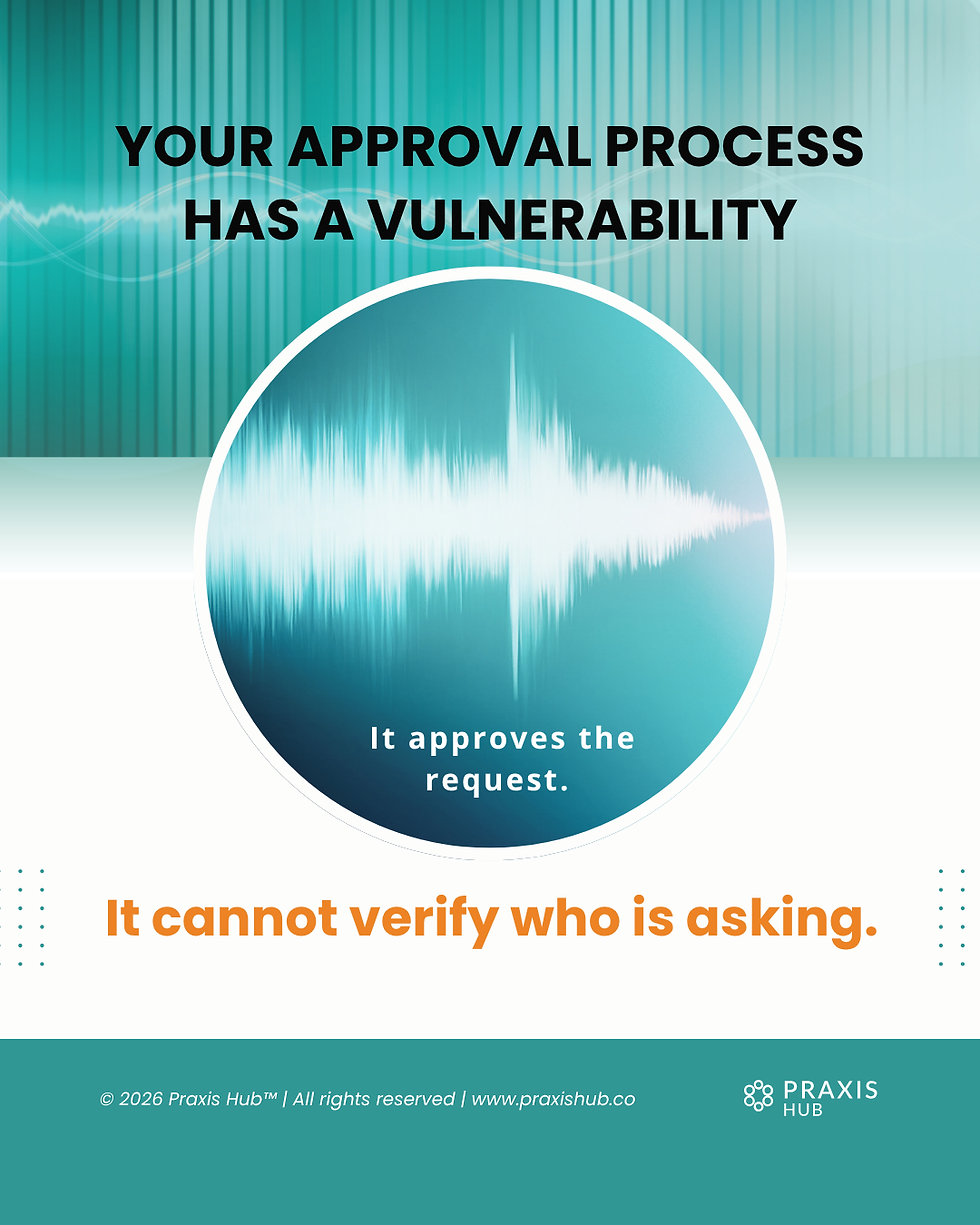
In each case, the attack succeeds not because the employee did something wrong but because the process had no mechanism to verify what the employee was hearing. The authorization chain was built around amounts and approvals. It was not built to verify identity. And voice cloning bypasses every amount-based or approval-based control by impersonating the person who sits above those controls.
This pattern appears across industries and business sizes. A growing company with ten to fifty employees is particularly exposed because the informal trust environment that made the business functional in its early stages becomes a structural gap as the team grows. The founder's voice carries automatic authority. Instructions from senior leadership are followed without secondary confirmation. That is not a culture problem. It is a process architecture problem.
The gap is never in what the owner knows. It is always in what the owner has stopped questioning.
AI Voice Cloning Fraud and the Back Office Gap
Every dollar the business earns eventually moves through a back office function: payroll, vendor payments, wire transfers, account changes, purchasing approvals. Those functions are where revenue converts to profit or where it disappears.
A back office built for efficiency, speed, and low friction is one that processes transactions quickly on the authority of whoever gives the instruction. That efficiency is the exposure. This attack does not need a vulnerability in the technology. It needs a vulnerability in the process. And the most common vulnerability is an approval chain that validates the request but not the identity behind it.
The deepfake fraud prevention post published here explored how this plays out in documented cases: businesses with dual authorization, payment thresholds, and experienced teams still processed fraudulent transfers because the controls caught the amount but not the identity of who was asking.
Voice cloning fraud follows the same structural logic. The fraudster does not break the approval chain. They step in front of it.
Revenue comes from the front office. Profit is protected in the back office. A back office without identity verification is protecting very little.
What Effective Controls Actually Look Like
The businesses where voice cloning fraud succeeds are not careless operations. They are businesses where the authorization process was built around amounts and approvals, which is the right structure for efficiency. What those processes were never designed to do is verify the identity of the person giving the instruction. That distinction is where the attack enters. In practice, the gap looks the same across different industries and business sizes. What is missing is almost always one of the same five things:
An authorization process with no callback requirement to a number already on file
High-risk requests confirmed through the same channel that delivered them, with no secondary verification step
No documented definition of what qualifies as a high-risk transaction in the first place
An escalation path that exists informally but was never written down or trained to the team
A culture in which a familiar voice carries final authority, with no process layer between the instruction and the action
These are not technology failures. They are decisions that were never made because the business ran well enough without them. And each one is visible from the outside in ways that daily proximity to the operation makes impossible to see from within.
Closing those gaps does not require a vendor relationship or a software purchase. It requires documentation, consistent application, and a team that understands what to do when a request arrives through an unexpected channel or comes with unusual urgency. The process is the protection.
Why This Gap Is Hard to See from the Inside
A business owner who has built a team, established relationships, and run the operation for years has also built a set of assumptions about how things work. Those assumptions are largely correct. They are also exactly what makes the gap invisible.
The verification step that was never added to the wire transfer process does not feel absent because transfers have always gone through correctly. The callback protocol that was never documented does not feel missing because the team has always been trustworthy. The escalation path that was never built does not feel necessary because leadership has always been accessible.
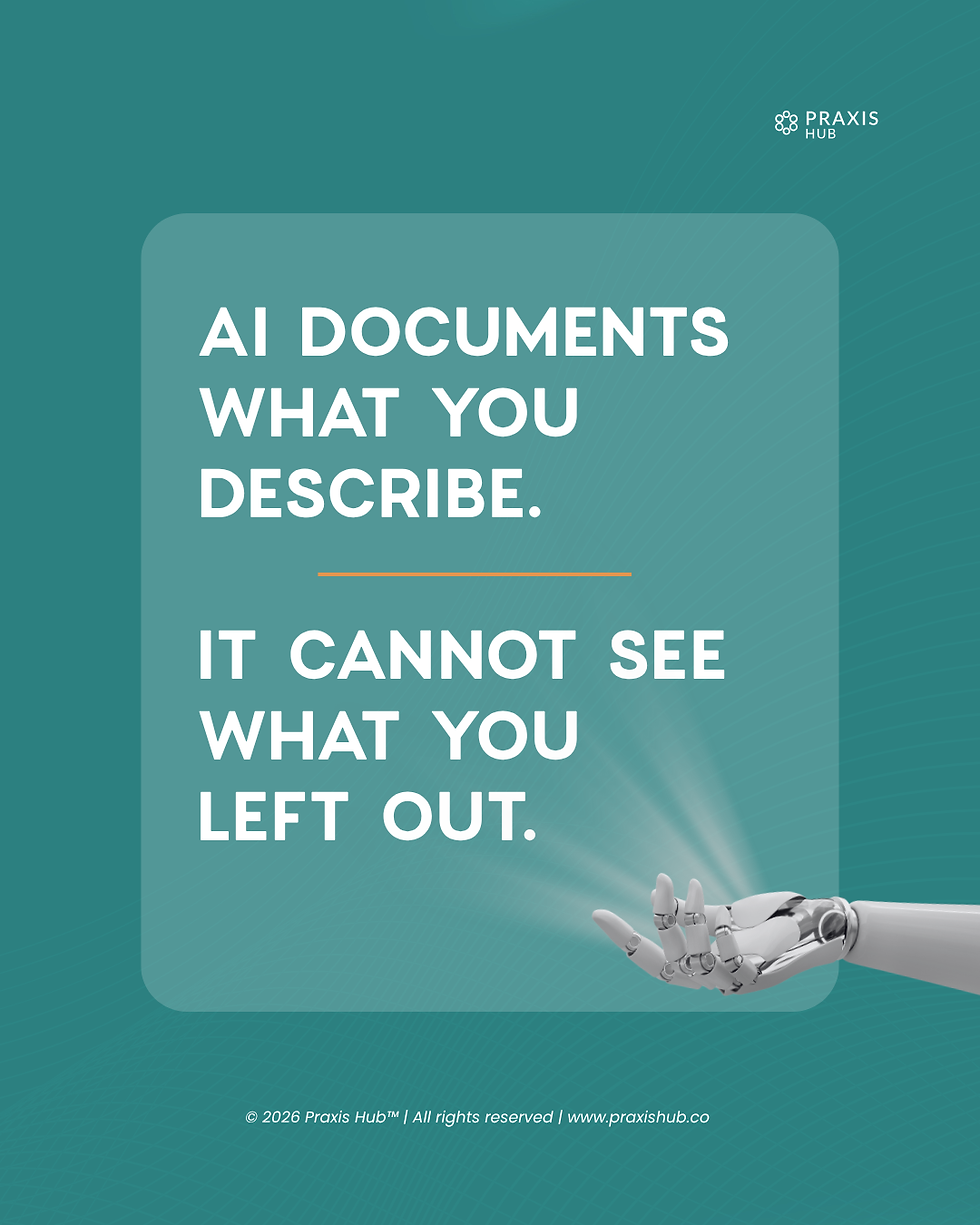
AI documents what you describe. It cannot see what you left out.
The same principle applies to any internal review of a process the owner built and operates daily. What feels complete from the inside and what is complete from a controls perspective are almost never the same thing. The gap is not in what anyone knows. It is in what has stopped being questioned.
An outside operational review sees the process as it functions, not as it was intended to function. That difference is where fraud finds its opening.
Free Resource: System Leak Audit
If you read this post and found yourself uncertain about whether your current approval processes have an identity verification layer, that uncertainty is worth investigating before an incident makes it concrete.
The System Leak Audit is a free diagnostic that walks through five categories of operational gaps that drain profit from the back office. Payment controls and authorization processes are one of those categories. It takes ten minutes and produces a priority-ranked view of where the business is most exposed.
Get the System Leak Audit - See where your business stands
Frequently Asked Questions
What is AI voice cloning fraud and how does it work?
AI voice cloning fraud uses machine learning tools to replicate a specific person's voice from a short audio sample. Fraudsters then use the cloned voice to impersonate executives, owners, or trusted contacts in phone calls or voice messages, directing employees to authorize transfers, change banking information, or bypass standard controls. The voice sounds authentic enough that employees acting in good faith comply. The attack does not require hacking a system. It requires only that the process has no identity verification step beyond recognizing a familiar voice.
Can AI voice cloning fraud happen to small and mid-sized businesses?
Yes. This is no longer a threat limited to large financial institutions. The tools that produce convincing voice clones are freely available and require no technical expertise. Businesses with informal authorization processes, founder-led approval chains, and limited documentation of escalation procedures are among the most exposed because the informal trust environment that built the business becomes a gap that fraud can enter through.
What is the difference between AI voice cloning fraud and deepfake fraud?
Deepfake fraud is the broader category that includes both synthetic video and synthetic audio. AI voice cloning fraud is the audio-specific form, in which a fraudster uses a cloned voice in a phone call or voice message to impersonate a trusted individual. Both exploit the same back-office gap: a controls architecture that validates amounts and approvals but does not verify the identity of who is making the request. The existing Praxis Hub post on deepfake fraud prevention covers the broader operational context in detail.
What internal controls reduce the risk of AI voice cloning fraud?
Three controls address the core exposure. First, a documented callback protocol that requires verification through a number already on file before any financial instruction delivered by phone is executed. Second, a verbal confirmation requirement for high-risk requests such as wire transfers, payment changes, and account modifications, using a channel separate from the original request. Third, a documented escalation path that gives employees a clear procedure when a request is urgent, unusual, or inconsistent with standard process. These controls do not require technology investments. They require documentation, training, and consistent application.
How does a business process review help prevent AI voice cloning fraud?
A business process review examines the actual authorization flow in the business, not the intended flow, and identifies where identity verification is absent from high-risk transactions. Most businesses that have experienced fraud-related losses had controls that addressed amounts and approvals but not identity. An outside review can see that gap in a way that internal familiarity prevents. The review also produces the documented procedures that give employees a defined path when they receive a request that something in the process cannot verify.
Ready to See Where Your Business Is Exposed?
If what you read here raised questions about your current authorization process, that is the right starting point. Business process improvement begins with understanding exactly where the current process architecture leaves the business vulnerable. That is where the conversation begins.
The Back Office Brief
Get a weekly insight connecting back office operations to profit. Delivered every week, free.



Comments